

Resources for Students, Teachers, Kids
Helping the public understand the judicial system is an important goal for the Maryland Judiciary. To help reach that goal, the Maryland Judiciary offers a number of services designed to let you know exactly what occurs in the judicial system, including:
Constitution Day
 Constitution Day is celebrated each year on September 17 to commemorate the date of the signing of the United States Constitution in 1787. Schools that receive federal funding are required, by law, to observe the day. Visit the Constitution Day page to learn more about our system of government and the Constitution of the United States.
Bill of Rights Day
 The first 10 amendments to our Constitution – what we know as the Bill of Rights – were ratified by December 15, 1791. Discover more by visiting these educational links.
Courtroom Tours
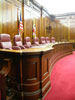 One of the best ways of understanding a courtroom is by watching a trial unfold in person. Tours are available for groups looking for such an experience. These tours can include visiting the local District or Circuit. There are also opportunities to sit in on an appellate case heard in front of the Appellate Court of Maryland or the state’s highest court, the Supreme Court of Maryland. Also, opportunities to speak with a judge about the judicial process can be arranged. For more information, please contact the Government Relations and Public Affairs at 410-260-1488.
Schools in the Courts Program
Four times a year, Anne Arundel County District Court Judge Shaem C. P. Spencer opens his courtroom to area high-school students as part of a three-hour program called Schools in the Court. The program educates students about the legal system while warning them about the consequences of making wrong choices, such as drinking and driving, drug use, and other crimes. After taking part in role-playing during interactive scenarios, the students discuss legal issues and the advantages of making positive decisions with judges, community leaders, and actual drunk driving offenders. Students then remain in the courtroom to watch as unscripted cases are presented to the judge, which gives students an opportunity to learn about real-life consequences of thoughtless decisions. Additional information about the program can be found on the Schools in the Court webpage.
Mock Trial Competition
 Each year, high school students throughout Maryland take part in Mock Trial Competitions. Since it began in 1983, almost 40,000 students from most counties in the state have participated. Courts host local competitions during the academic year, and, in the spring, the two finalist teams compete in the State Championship held in the Supreme Court of Maryland. The program is sponsored by Maryland Youth and the Law (MYLAW), in cooperation with the Maryland Judicial Conference and Maryland State Bar Association.
Speakers Bureau
The Speakers Bureau provides the Judiciary with a vehicle to effectively communicate openly with most community groups, including civic organizations, professional associations and schools.
Some ideas for topics include:
Alternative Dispute Resolution • The Appeals Process • Bail Review • Domestic Violence • Traffic Court • Sentencing In Maryland • Jury Trials • Judge’s Role in a Civil Case • Judicial Independence • Juveniles in Court
The Speakers Bureau will match your request with the judge and/or court official that best matches the topic or area of interest to your audience. However, judges are bound by the Code of Judicial Conduct, and therefore, are unable to address certain matters, such as pending litigation.
You may use the Speaker Request Form when requesting a judge or court official to speak at your engagement or event.
When making a request, be sure to include the following information:
- Your name, address and phone number
- Name, date, time, location and brief description of the event
- Name, address, phone number and brief description of the organization
- Audience profile and size of the audience expected
- Will there be any political, commercial or fundraising purpose of the presentation
- Speech topics and length desired
- Request for a specific speaker
- Audio/visual equipment can/cannot be provided
Your request for a speaker can be sent by fax, mail, email or phone to:
Maryland Judiciary Speakers Bureau
Government Relations and Public Affairs
187 Harry S. Truman Parkway
Annapolis, MD 21401
fax: 410-260-1749
phone: 410-260-1488
email: [email protected]